I
From Wikipedia – This park and the co-managed state parks protect almost half of all remaining coastal redwoods, the tallest trees on earth. There are three large river systems in this very seismically active area, and 37 miles (60 km) of protected coastline reveal tide pools and seastacks. The prairie, estuary, coast, river, and forest ecosystems contain a wide variety of animal and plant species.
- Established: 10/2/1968
- Annual Visitors: 482,536
- Size: 138,999 acres
Our second day in Monterey, CA we drove down the coast to Big Sur. California’s Route 1 is closed north of San Simeon, CA up to Big Sur due to a January 28th, 2021 mud side. It is expected to reopen the end of April 2021, after we were there, so we chose to stay in Monterey and drive the roughly 30 miles back south to experience Big Sur. Enjoy the slide show of our travels below : )
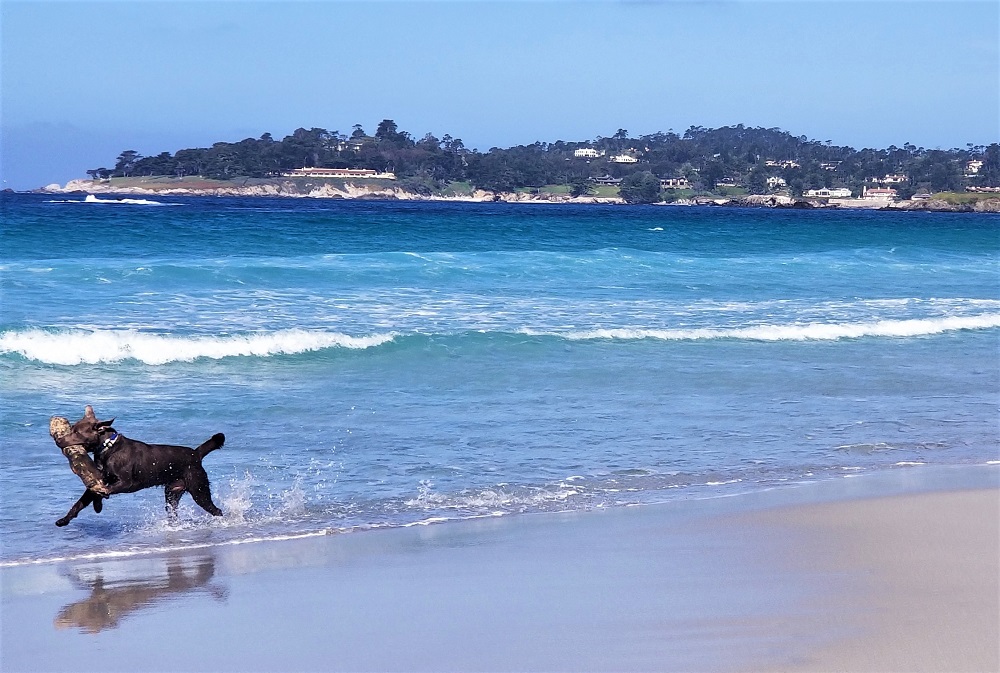
Rangeley once again loving running free on the beach. The 10th hole of Pebble Beach is right behind us. 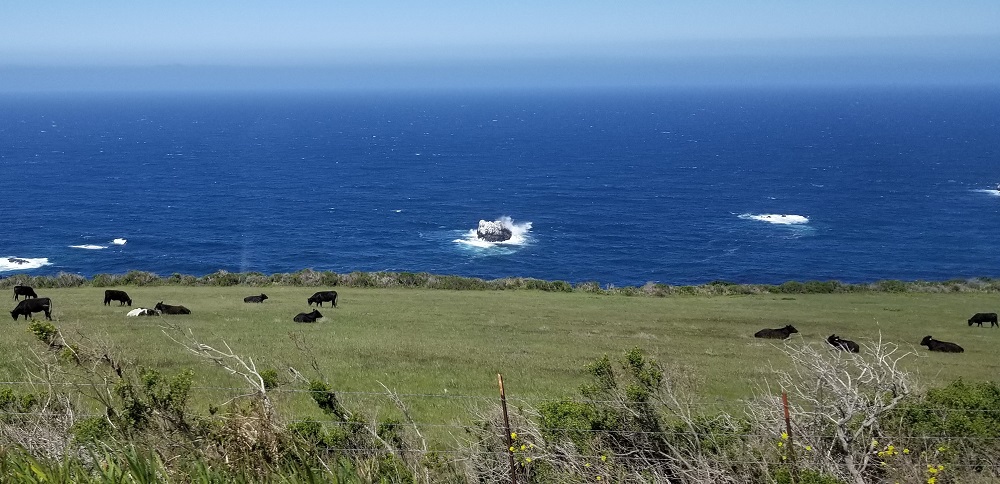
Driving down the coast. Not a bad view for the cows. 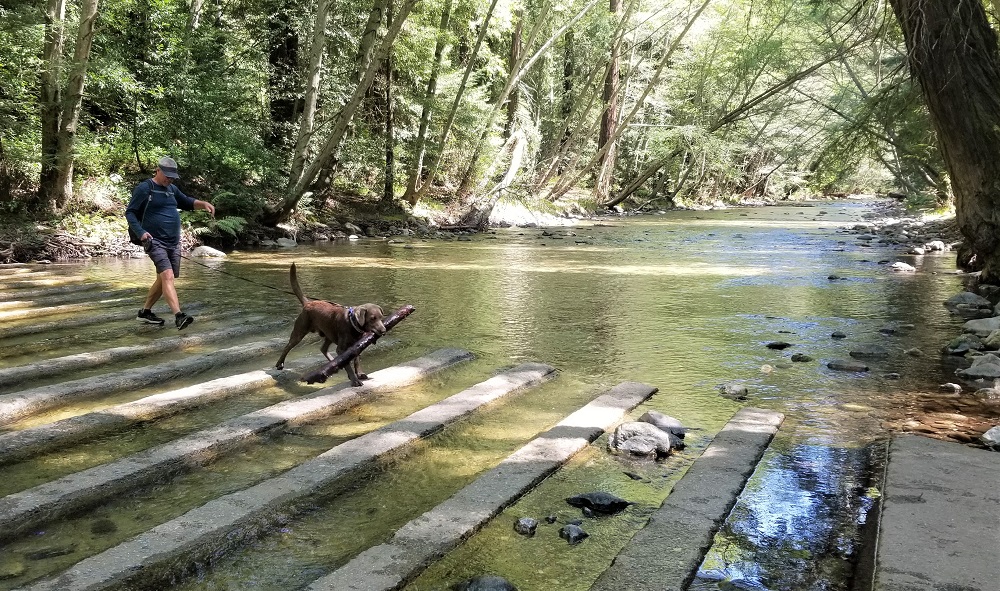
River crossing in Big Sur State Park. 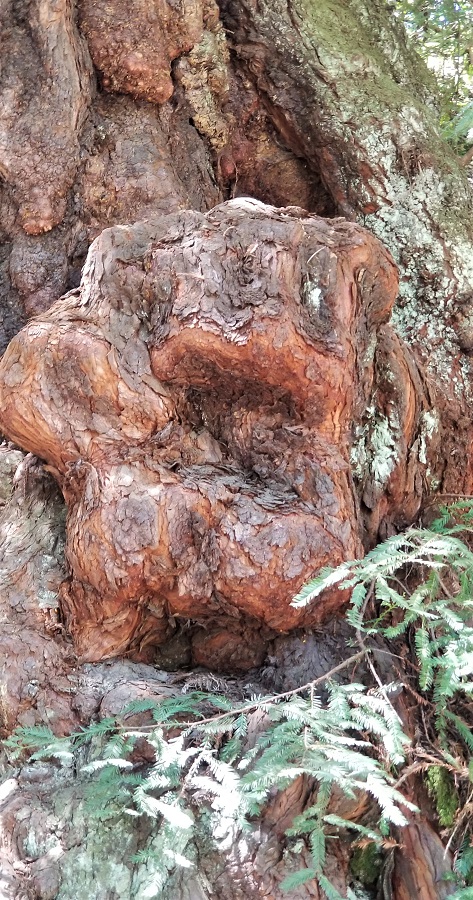
A “paw print” on a redwood tree. 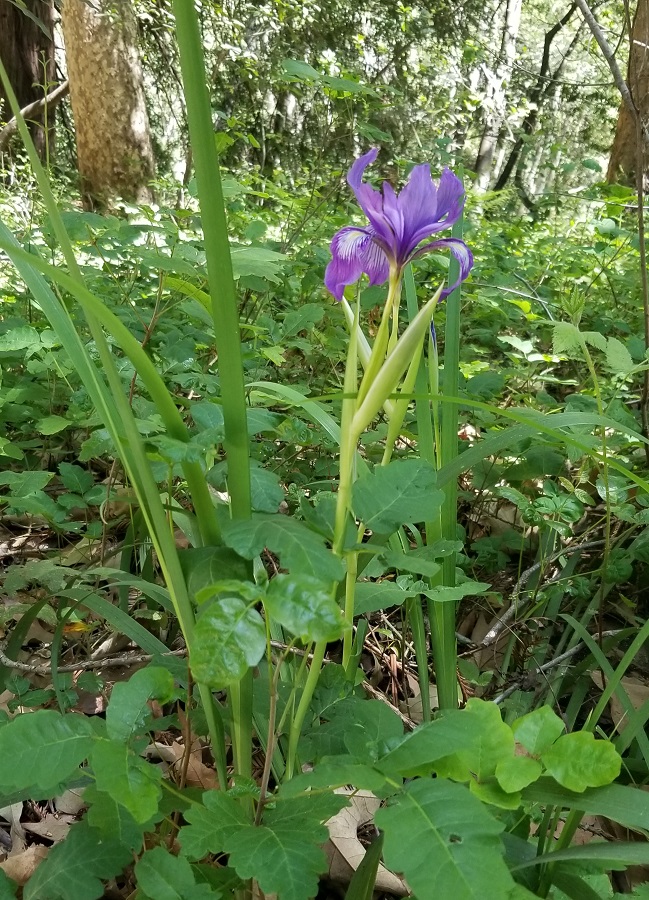
Wild Iris in the Big Sur woods 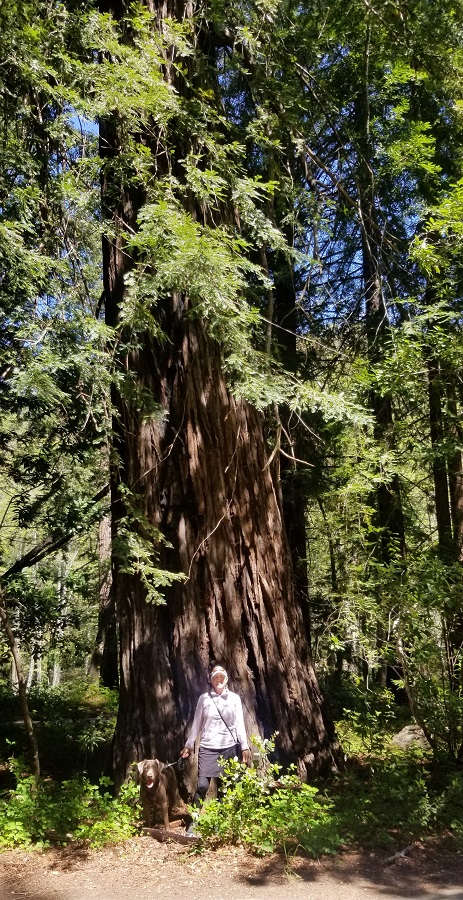
We thought these Redwood trees were big in Big Sur State Park. (Until we got to the National Park) 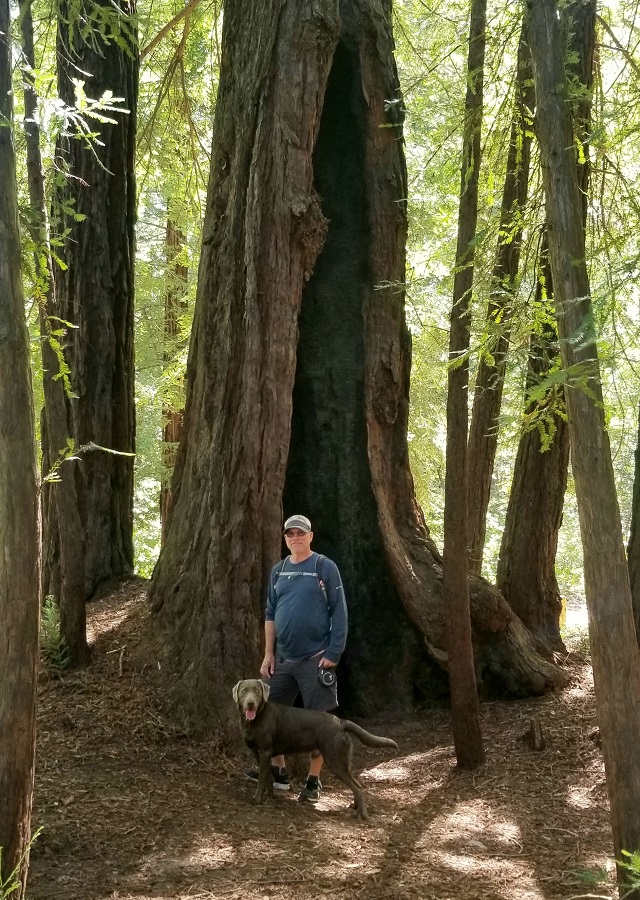
Big Sur State Park
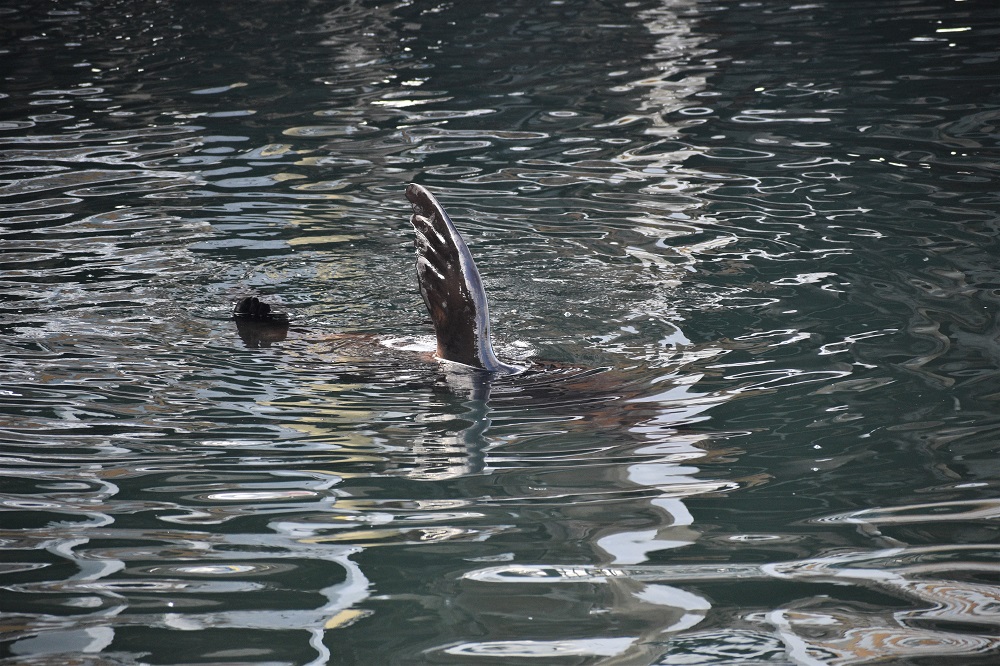
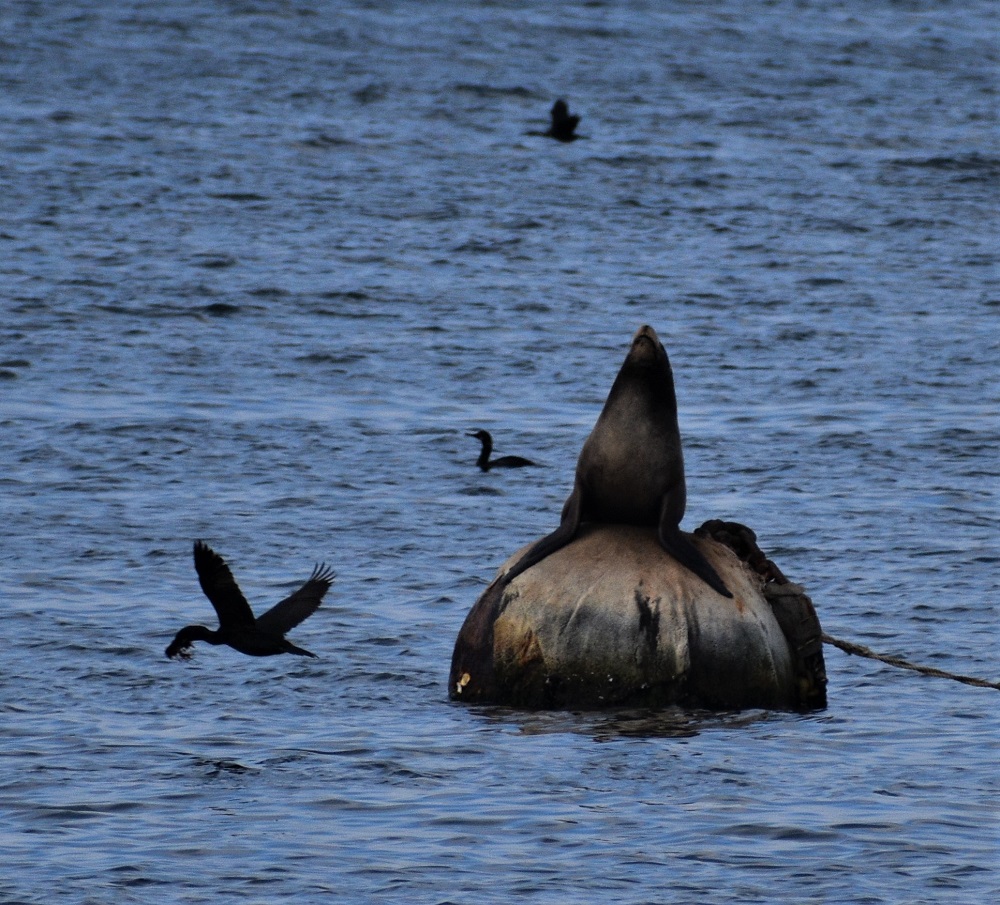
Our hotel in Monterey was just over a mile to Fisherman’s Wharf. We walked past a riparian pond and an on-lead dog beach for Rangeley. He loves the sand, water, waves and is fine on the 16ft flexi lead. Our last night in Monterey we enjoyed the Wharf’s sea lions barking out a chorus, their jumps up onto the decking under the wharf and a fabulous ice cream sundae while walking along the marina. See photos below.



We left Monterey, drove the coast through San Francisco, stayed a night in Santa Rosa, and took our time driving the close to 300 miles from Santa Rosa up to the Kuchel Visitor Center north of Eureka, CA. Growing up in the northeast (Vermont), I was awestruck driving up the scenic CA1, Pacific Coast Highway. I was witnessing the beauty of tall mountains to my right/east and the roaring waves of the Pacific Ocean to my left/west. See pics of our adventures in route below.
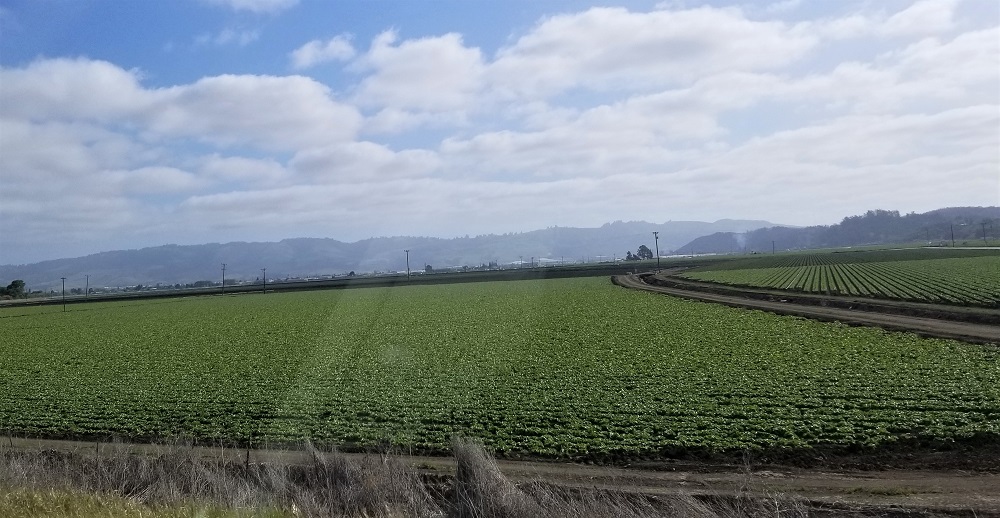
Like the Beatles wrote – “…strawberry fields forever…” Avocadoes were 7 for a dollar at a fruit stand. 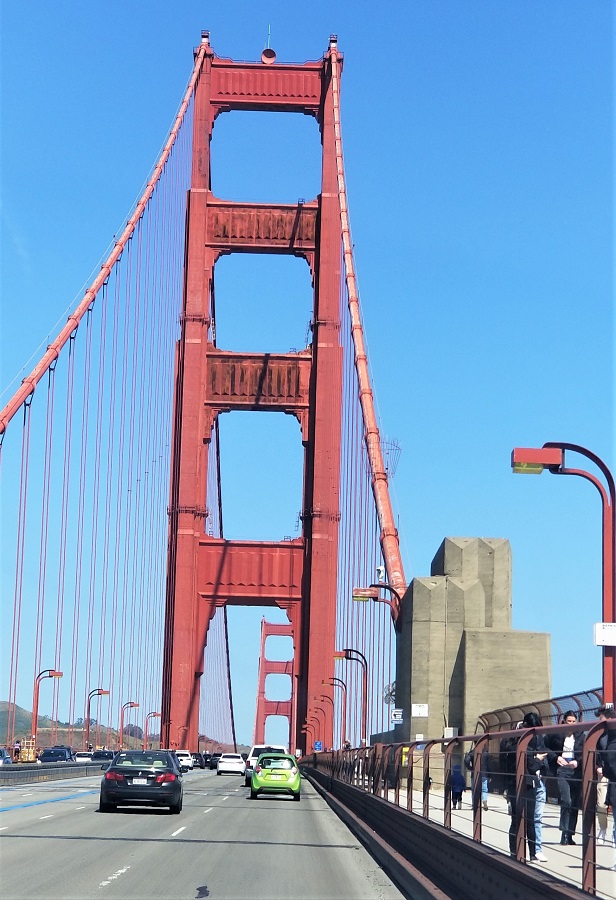
Crossing the Golden Gate 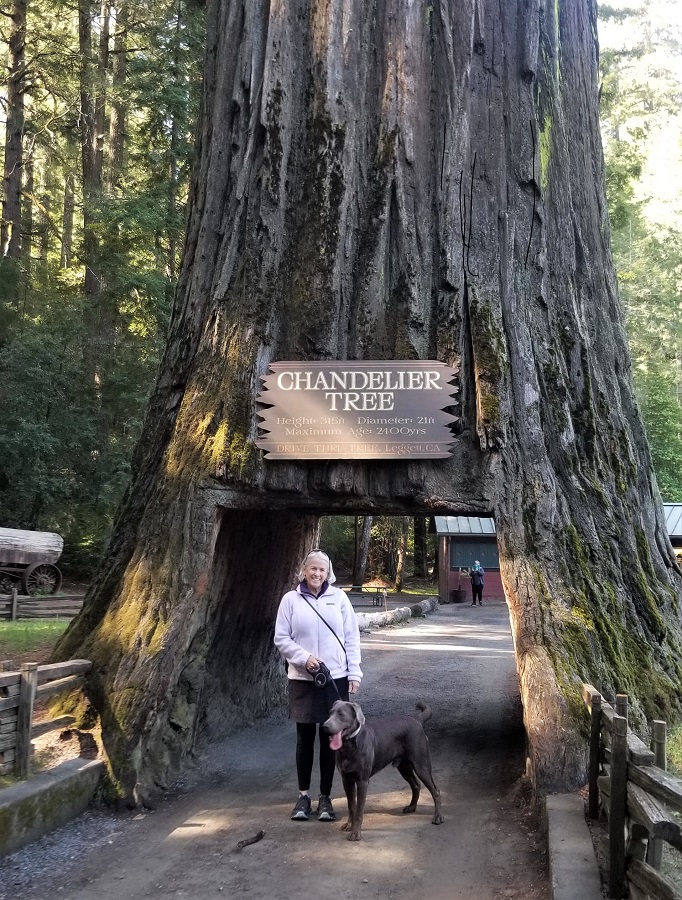
This tree is 315 feet tall, 21 foot diameter and 2,400 years old. 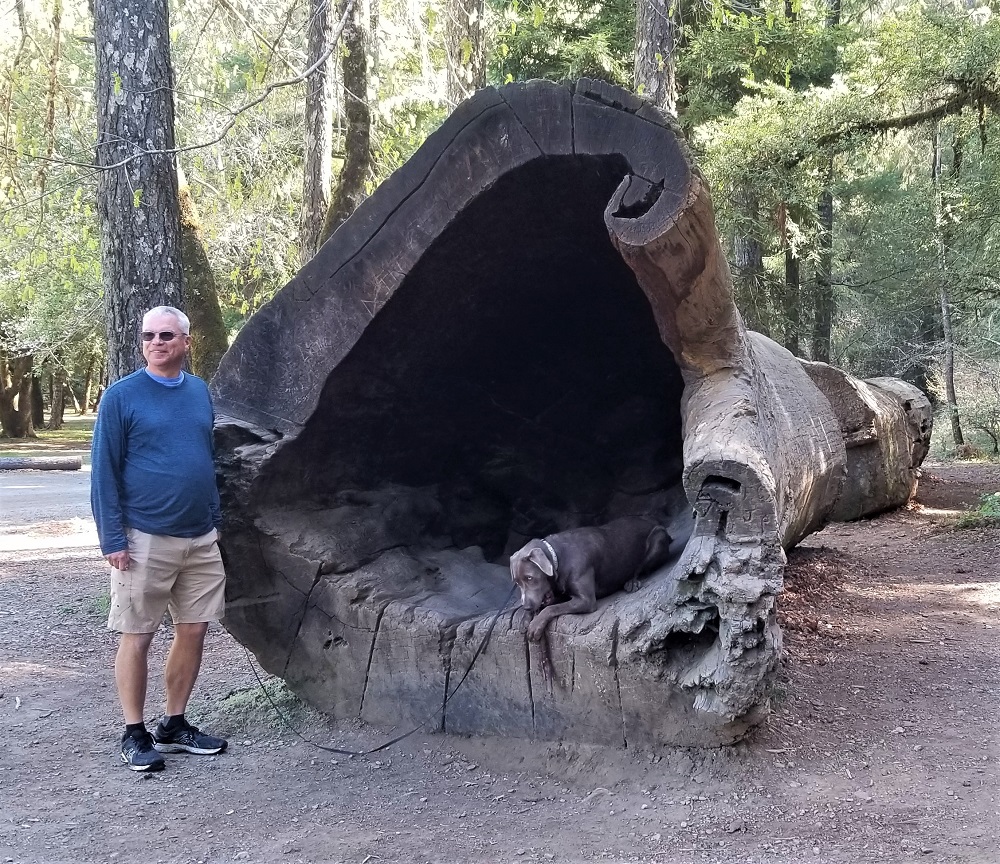
Rangeley enjoying a stick while in a stick, well sort of. 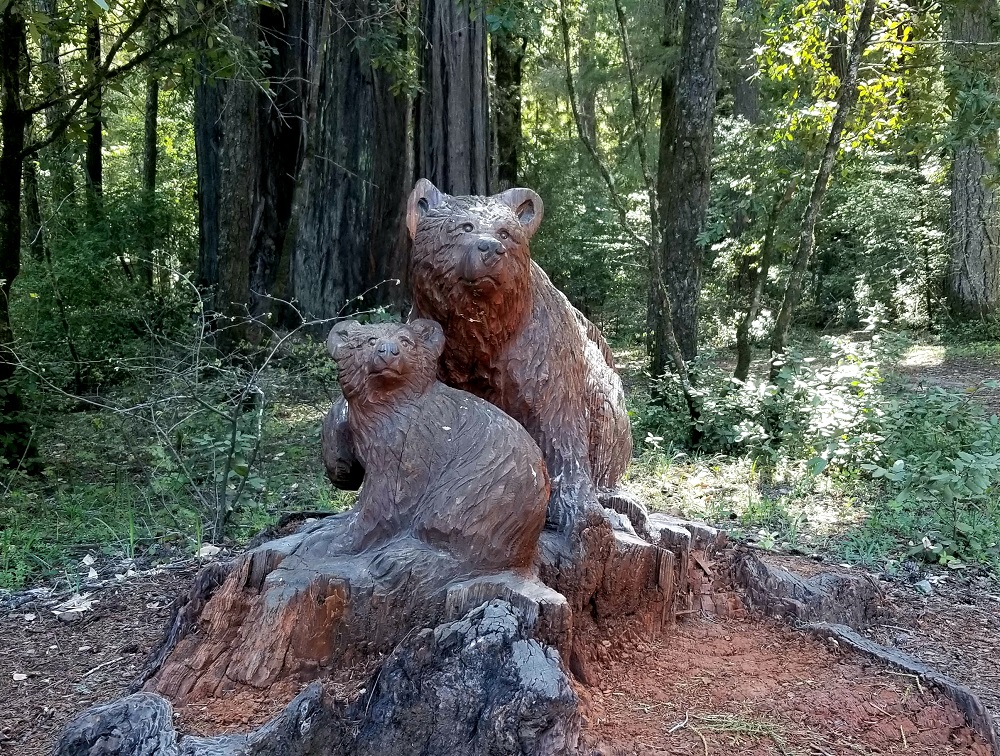
Amazing chainsaw carvings in Leggett, CA. 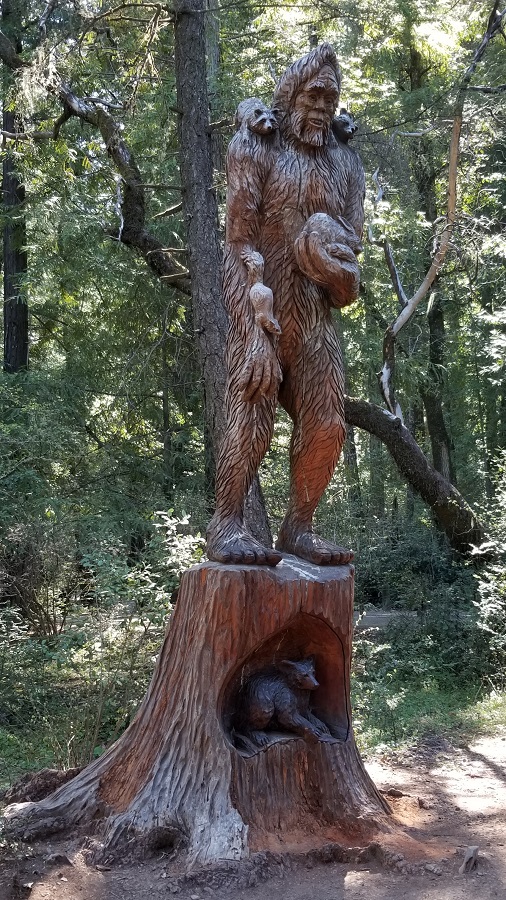
Sasquatch is about 15 feet tall. Notice the various animals on him. 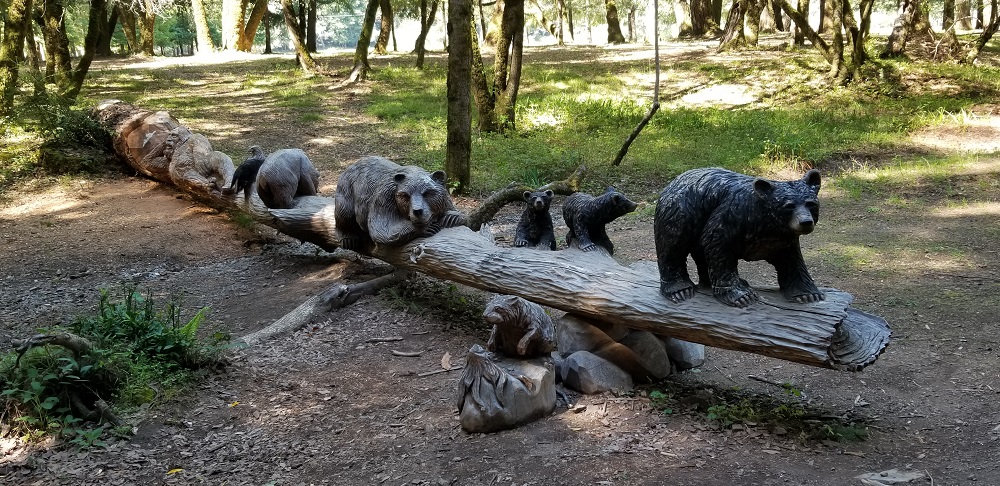
Sasquatch carved within the log, an eagle and 6 bears 
Geese in the pond by the drive thru tree and wood carvings.
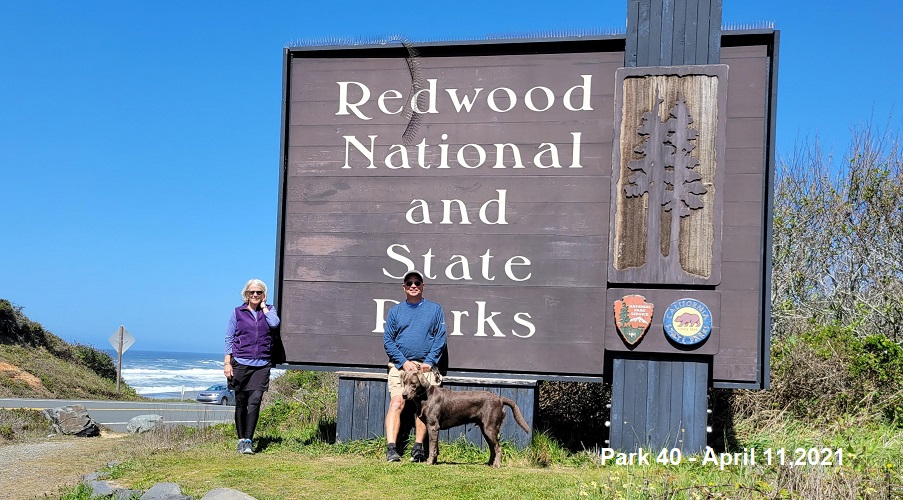
California has a huge Coastal National Monument covering the waters off the northwest corner of the state and Redwood is a collaboration between the state and national parks so this park is called Redwood National and State Parks which spans a bit south of Orick, CA to its northwest border of Oregon. The Park’s entrance sign is on a thin strip of land called Harry A. Merlo State Recreation Area. The Pacific Ocean is to the west and the fresh water Big Lagoon to the east.
Redwood National and State Parks – April 11, 2021
At the visitor center we were able to get a map and description of all the places dogs can go in the park’s system. We chose a wonderful dirt path called Cal-Barrell Road. A three mile stretch from Newton B. Drury Scenic Highway walking northeast towards CA101. Wow! What a beautiful trek! There were three cars in the tiny lot…on a Sunday no less…and we only saw a few people. Rangeley stayed on his 16ft flexi lead but found sticks and joy at every step. I have only seen the majestic Redwoods once before in Muir Woods north of San Francisco roughly 20 years ago. Muir Woods does not allow dogs so we did not go there this time. The peaceful walk on Cal-Barrell Road amongst the magnificent trees, deep in a forest of ferns, spring flowers and the over 2,000-year-old history was humbling. See pics below.

This is the beach at the Redwoods visitor center. There were gale warnings out, so the sea was very rough. 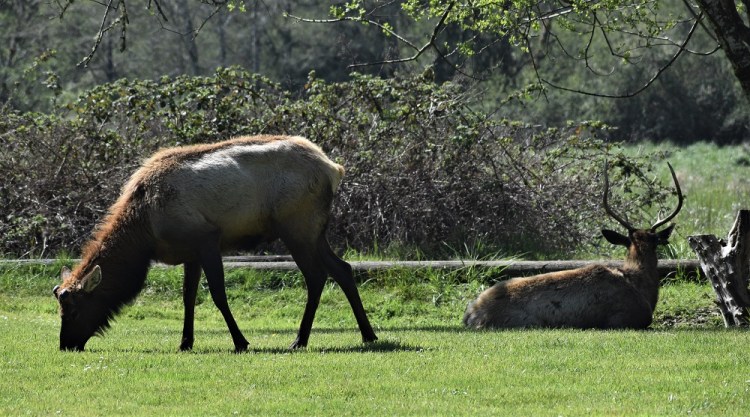
Elk along the road just inside the park 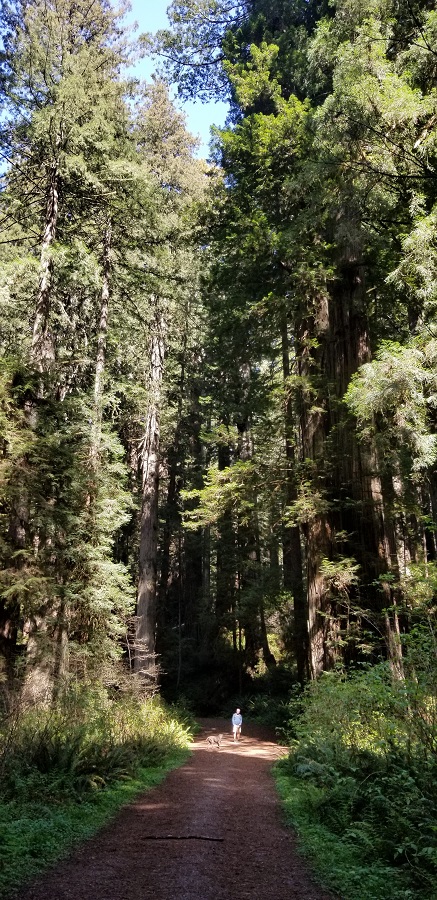
Gary and Rangeley walking up a Cal Barrel road in Redwood National Park. The road was closed to traffic. 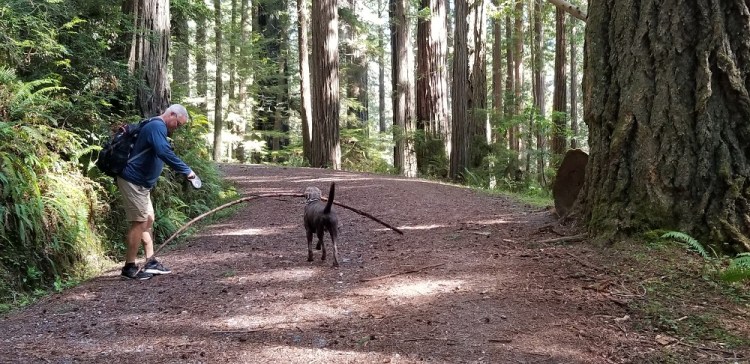
Not the biggest stick, but certainly one of the longest. 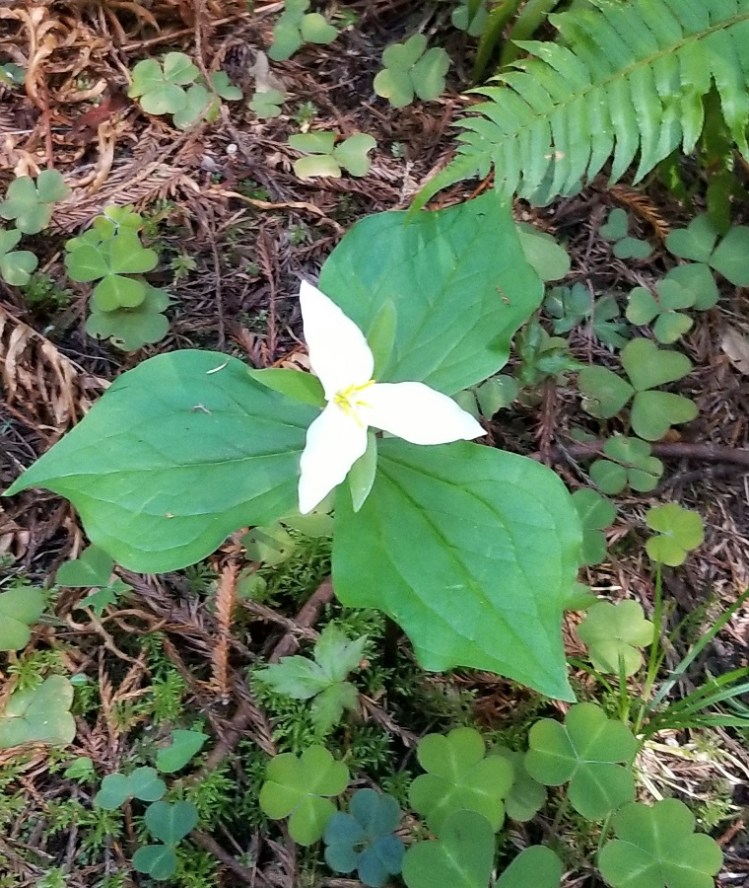
California Trillium 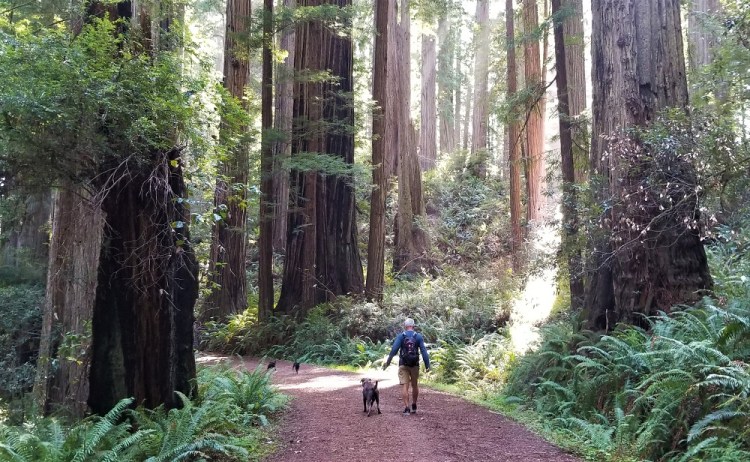
What an amazing forest. 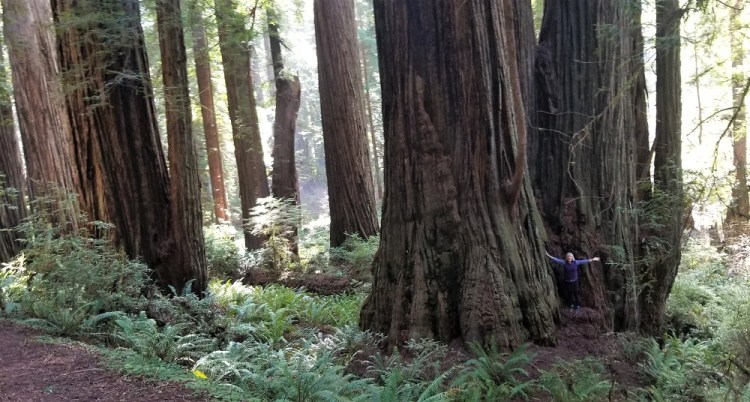
Elizabeth is dwarfed by these redwoods. 
Elizabeth hugging a grouping of redwoods. 
Gary trying out for the Ewoks vs. Stormtroopers chase scene. 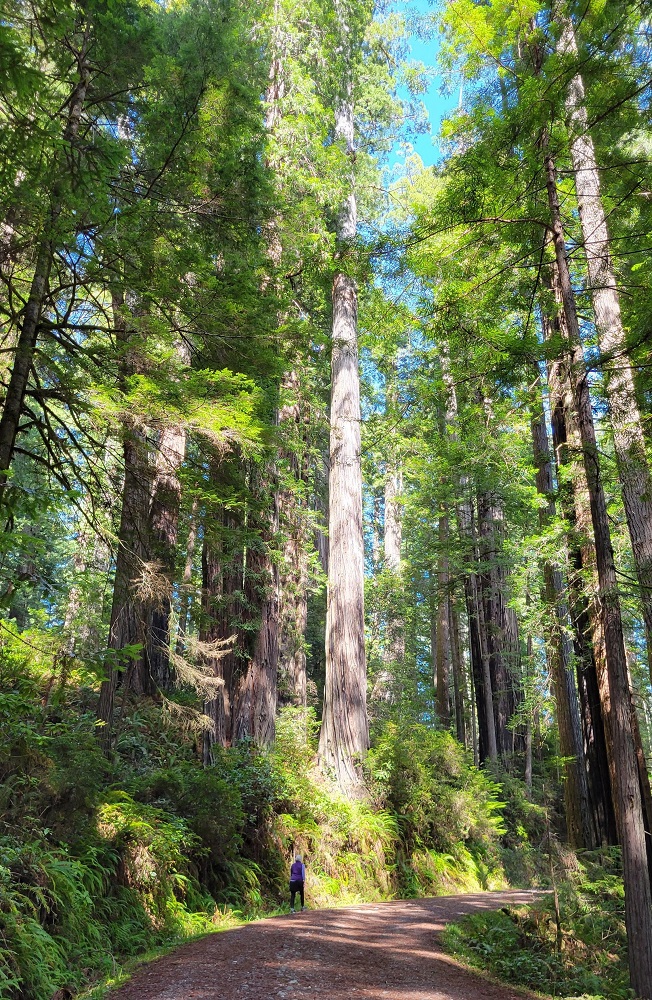
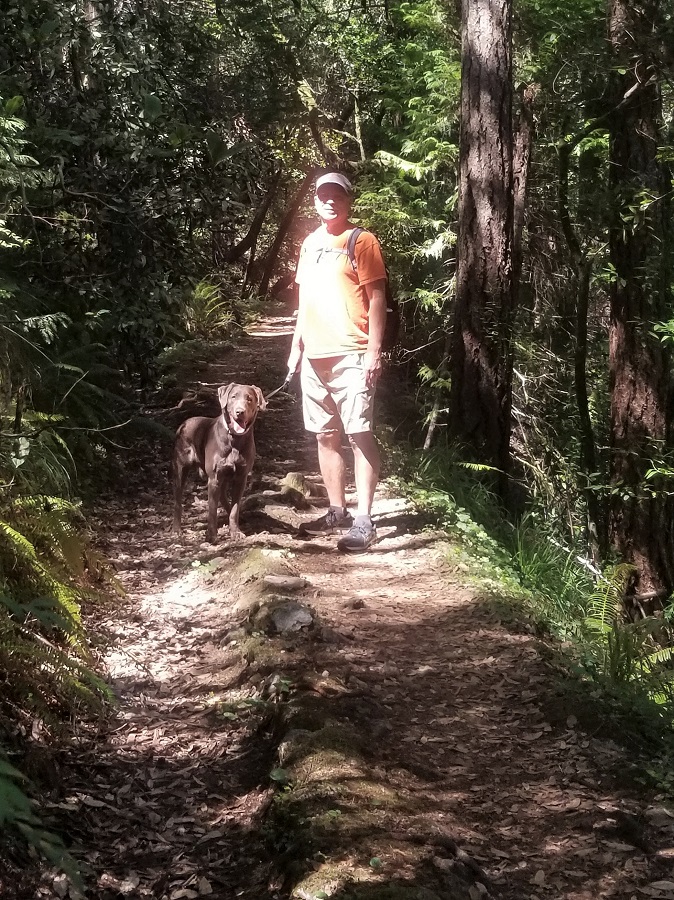
Elizabeth walking up the road. 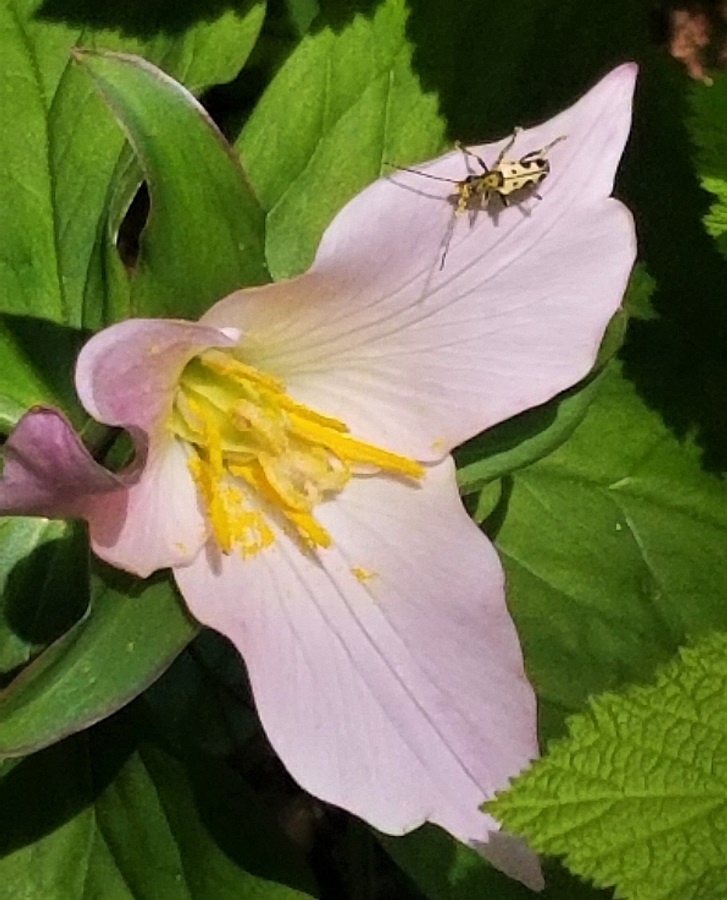
Pink California Trillium 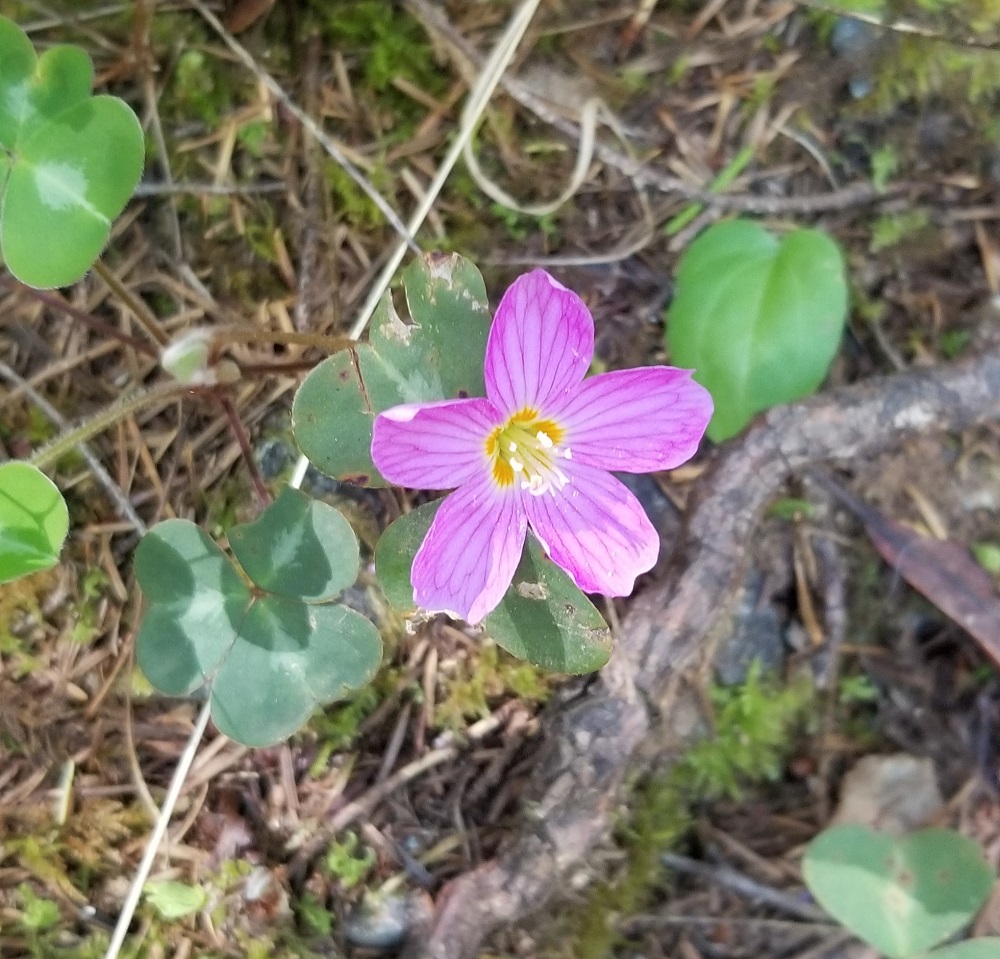
Pink Woods Sorrel, Oxalis 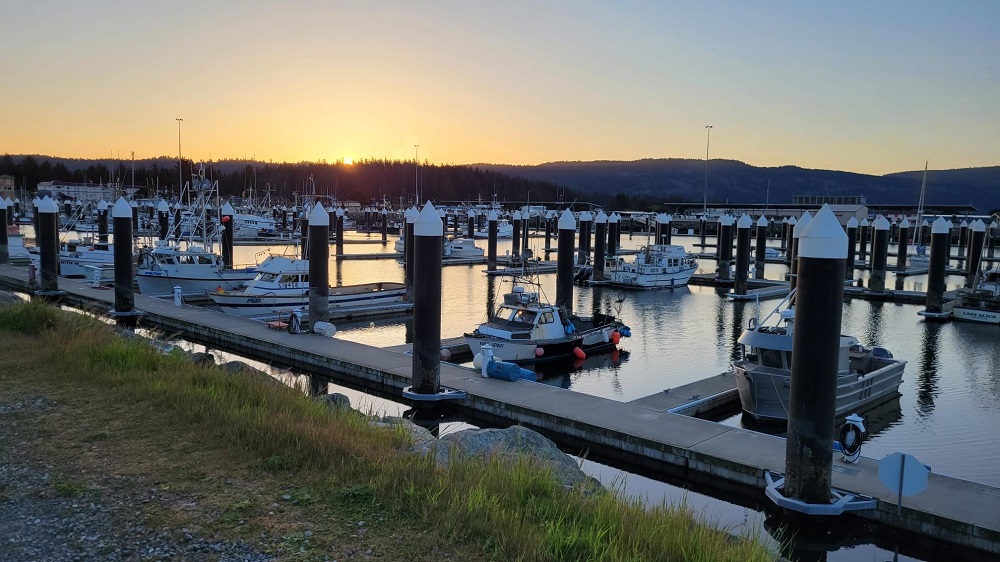
Sunrise over Crescent City Harbor
Redwoods start as a seed and grow to over 500 tons. They can reach for the sky up to 380 feet tall with a possible diameter of 22 feet! That is 70 feet around. The preservation of these Coastal Redwoods began as early as 1794. These giant trees have no tap root, their root system is only 10-13 feet deep and spread out 60-80 feet out from the trunk. The average age of these mature trees is 800 to 1,500 years old. The oldest coastal redwood is 2,500 years old. FYI – the giant sequoias can be 3,200 years old and a bristlecone pine in Great Basin National park was determined to be almost 5,000 years old.
Redwood – Day 2
Day two in Redwood was relaxed and wonderful! I keep saying “today was the best day ever” for us, especially Rangeley and will say it again on this fabulous sunny afternoon.
We took the morning to get up slowly… Okay, Rangeley and Gary are usually outside walking around by 6AM, but I slept till 7 and we didn’t have to pack up and move today so I enjoyed my coffee, did laundry, worked on the journal and pictures for this post!
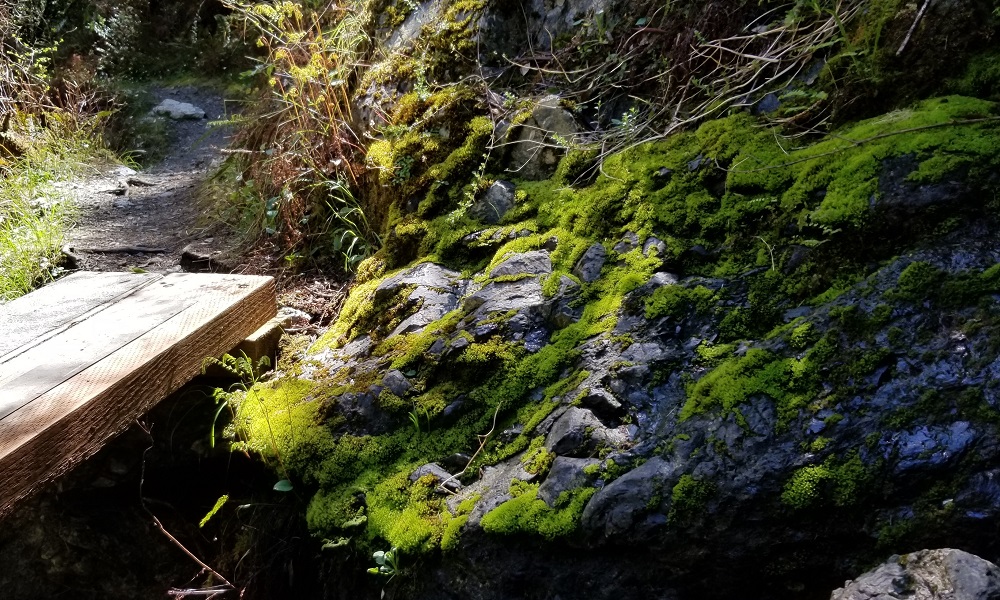
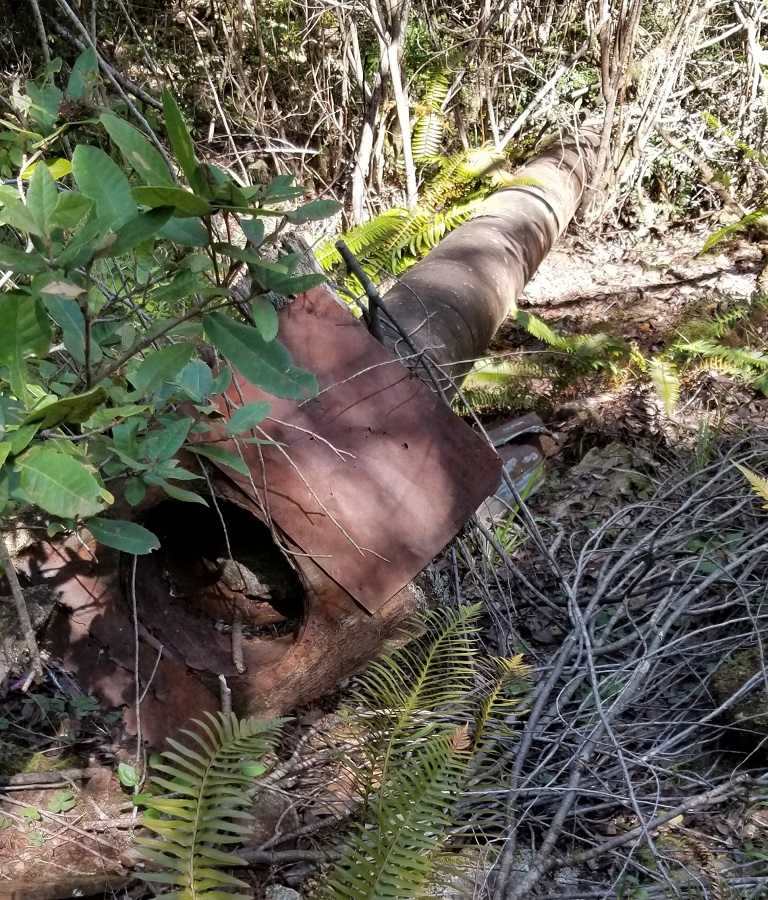
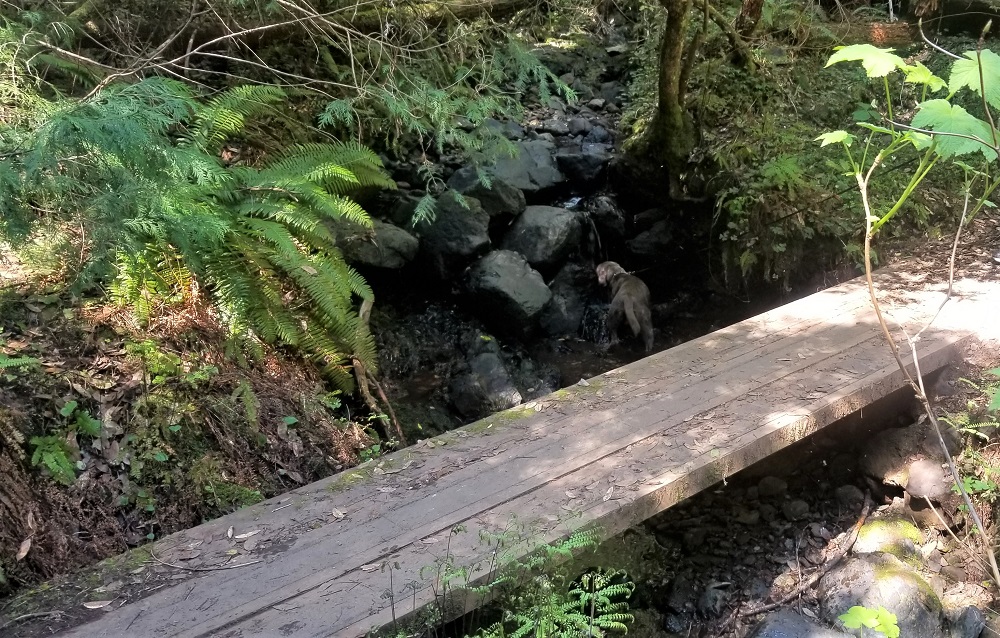
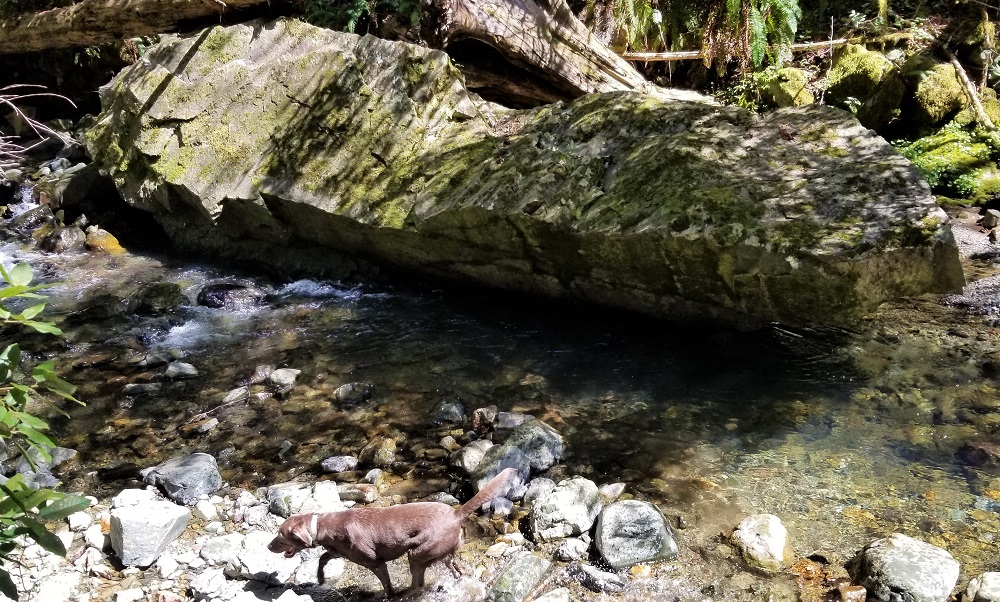
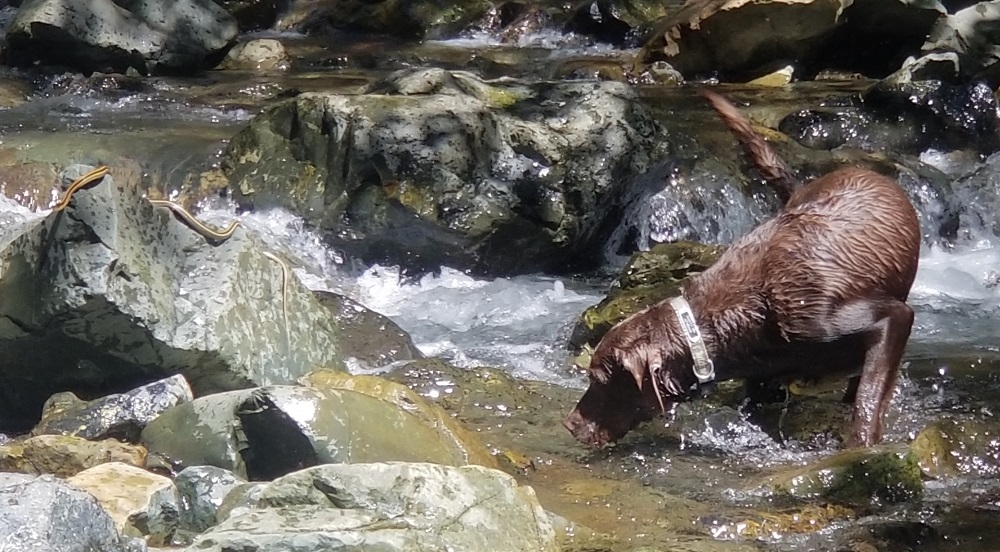
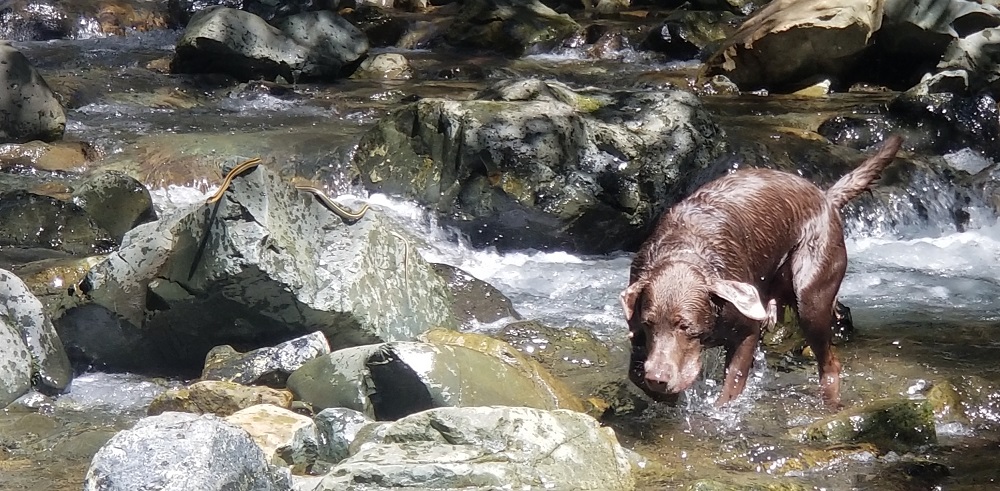
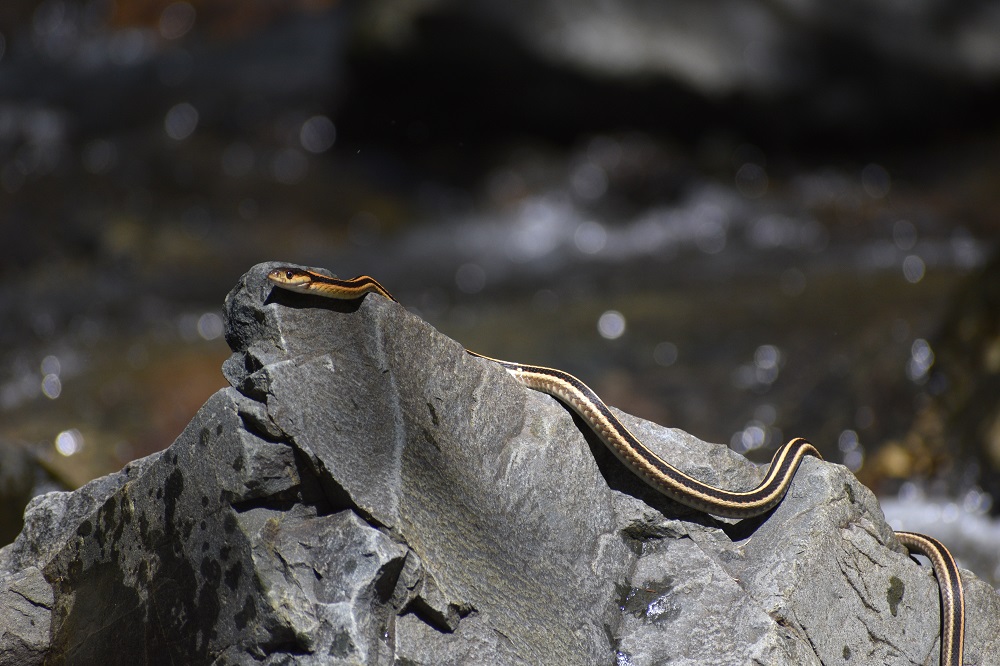
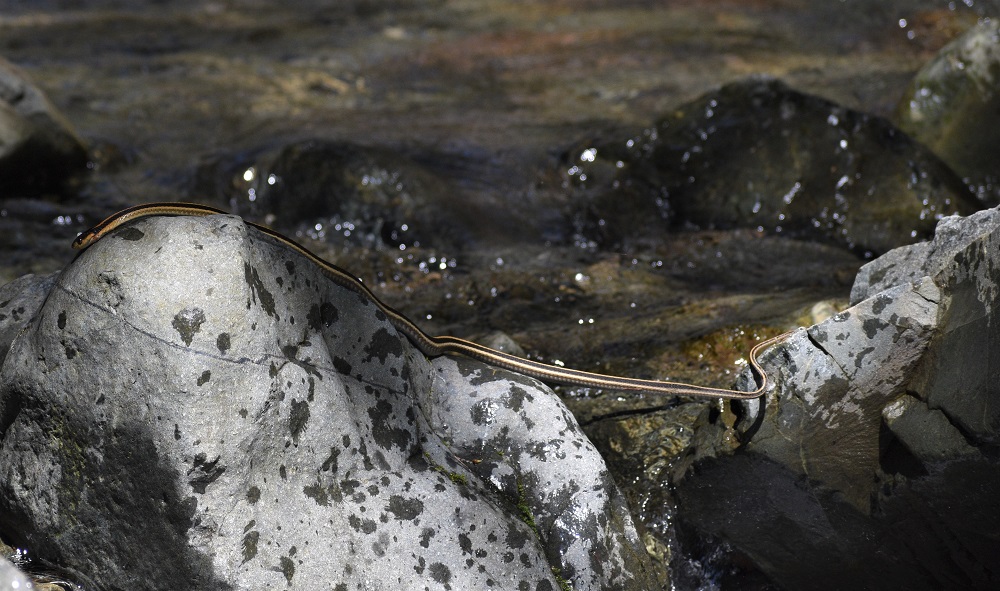
We hiked in the Smith River National Recreational Area. Myrtle Creek Trail is a 1 mile, out and back, following The Myrtle Creek Mining Ditch that fed water to the folks that came to strike it rich in the late 1800’s while they panned for gold in the Myrtle Creek and Smith Rivers below the trail. The short-lived Myrtle Creek Consolidated Hydraulic Gold Mining and Manufacturing Company (1890-1894) used clay pipes in this area, and throughout the China Ditch in Oregon, to get water from the mountain streams down to where they were mining. The pipe brought the natural flowing water pressure up to 15,000 gallons per minute! This area is full of lush vegetation and considered a Botanical Area. I read on one of the interpretive plaques along the hike that there are wild ginger plants among many others. Enjoy the pictures of our wonderful hike below.
We enjoyed a late afternoon seafood dinner by the marina near our hotel (Quality Inn in Crescent City, CA.).
Unlike most of the parks in the United States, one can enjoy elk, bear, huge trees, and mountain hikes but also kayak, windsurf, fish, play in tide pools, streams and fresh water lagoons. You eat local beef and seafood, walk amongst pine trees and chase crabs through seaweed on the beach all in the same park! How wonderfully diverse our country is and what a privilege and pleasure to breathe it all in!
Be well my friends! Next post, in a few days: Olympic National Park in the state of Washington.
Not all those who wander are lost.
J. R. R. TOLKIEN
About Us
Visitors will want to know who is on the other side of the page. Use this space to write about your business.
 Gary and Elizabeth's Adventures